How to Store a Fur Coat in Los Angeles Heat
A warm closet and a plastic garment bag are the two most common ways a good fur coat gets ruined in this city.
September 3, 2026 · 4 min read
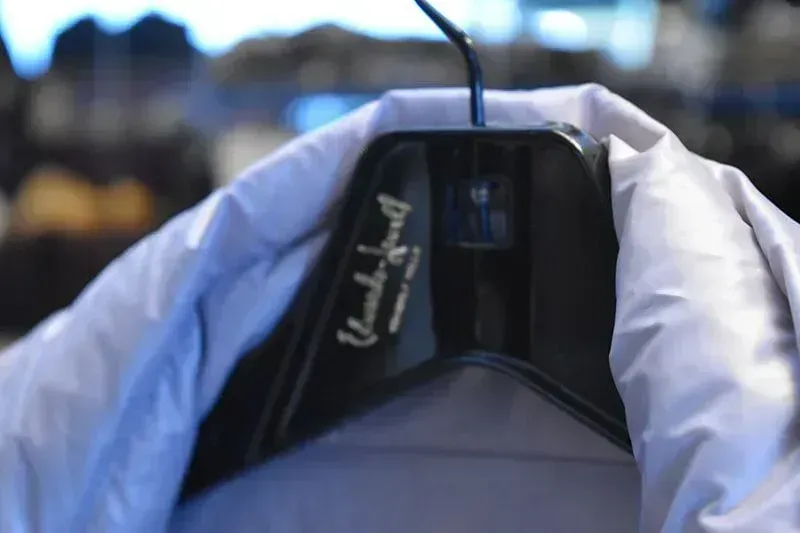
What the heat is actually doing to the pelt
Fur is skin with hair attached, and skin needs a narrow band of temperature and moisture to stay supple. Los Angeles swings hard between a warm, dry day and a closed-up house holding its own heat overnight, and a fur coat left in that swing dries out from the inside. The pelt loses its natural oils first. Then it stiffens. Then it cracks, usually along the seams and under the arms, where the coat flexes the most when it's worn. By the time an owner notices a crack, the damage predates the moment they saw it by months.
Two habits that do the most harm
Most fur damage in this city comes from two well-meaning choices. The first is a bedroom closet, which holds heat, has almost no airflow, and often sits against a wall that warms up in the afternoon sun. The second is a plastic garment bag, which feels protective but does the opposite: it seals in whatever moisture is already sitting in the fur and stops the pelt from breathing, so the coat sits in its own trapped humidity for months at a stretch.
A few seasons of that cycle and even a well-made coat starts to shed at the guard hairs and lose the shine a healthy pelt has naturally.
Signs a coat has already been affected
A few things to check before you decide a coat is fine as it is. Run a hand along the inside of the pelt, not just the fur side, and feel for stiffness rather than the soft, pliable hide it should have. Look for shedding on your hands or your clothes after you wear it. Check the seams under the arms and along the shoulders, which are usually the first places a dried pelt starts to crack. None of this is visible from a few feet away, which is exactly why heat damage tends to go unnoticed until a repair is a bigger job than it needed to be.
What a controlled vault is actually built to prevent
A cold storage vault is not just a cooler. Ours is a two-story facility built specifically for fur, holding a steady temperature and humidity range that a home air conditioner was never designed to maintain, because a home unit is built to keep people comfortable, not to protect hide. Kept in that range, a coat's natural oils stay in the pelt instead of evaporating out of it, the hide keeps its shape, and moths and other pests, which are drawn to the oils and keratin in fur, are controlled for directly rather than left to chance in a closet.
- Fur coats, vests and jackets
- Shearlings and leathers
- Wool coats with fur trim
- Vintage and heirloom garments
Keeping it on your own premises
We store everything on-site rather than sending it out to a third-party warehouse, so a coat that comes in for storage never leaves our building and never travels twice. Access is limited to trained staff. Retrieval typically takes twenty four to forty eight hours, and pickup and delivery is available anywhere in greater Los Angeles on request. Whether you need a coat stored for a single season or year-round, the point is the same: it should never sit through a Los Angeles summer in a closet.
Seasonal storage or year-round
Some clients bring a coat in every spring and pick it up again in the fall, using the vault the way it was designed to be used: a place to keep fur safe through exactly the months it isn't being worn. Others store a piece year-round, either because they only wear it on rare occasions or because they simply don't have anywhere at home that comes close to the conditions a coat needs. Both are common, and neither is treated differently once the garment is in the vault. The controlled conditions don't change based on how long a coat stays. A coat picked up after four months and one picked up after four years come out the same way: conditioned, shaped, and ready to wear.
We also store shearling coats and vests, leather jackets, and wool coats with fur trim under the same conditions, since all of them are more sensitive to heat and dry air than most people assume. If you're deciding what to bring in and what to leave out, the simplest test is whether the piece has real hide in it. If it does, a Los Angeles closet is the wrong place for it to spend the summer.
If you're not sure whether a coat has already been affected by the heat, bring it in. We offer a free in-person inspection, and a look at the pelt tells us in minutes whether it needs conditioning before it goes into storage. Call (310) 360-0466 to schedule.
Edwards-Lowell, (310) 360-0466
Call (310) 360-0466More articles
How Often Should a Fur Coat Be Cleaned
The oils and dirt a coat picks up over one season of wear are invisible, and they are exactly what a dried-out pelt or a moth problem starts with.
Restyling an Inherited Fur Coat
It's usually too good to give away and too dated to wear as it is, which is exactly the problem a restyle solves.