What Makes a Vintage Fur Worth Keeping
A vintage fur isn't just an old coat, and the real difference is usually in the pelt and the paperwork, not the sentiment.
September 3, 2026 · 3 min read
Construction you can't buy new anymore
A vintage fur isn't just an old coat. Many of the pieces we handle use construction techniques and fur types that simply aren't made the way they used to be, whether that's a specific pelt matching method, a hand-finished seam, or a fur type that's become rare or hard to source through modern channels. That's a real, physical difference from a new coat, not a sentimental one, and it's the first thing worth checking before deciding whether a piece is worth keeping.
The provenance question
Where a coat came from matters. A piece with verified provenance, meaning we can speak to its origin and history with confidence, carries a different kind of value than a coat with no known background. Over the decades we've hand-selected pieces from private collections, luxury donors and global fur auctions, and many were custom-made originally for clients of the old Beverly Hills salon. Some pieces come to us as trade-ins from long-time clients, some as charitable donations from Beverly Hills estates, and some are studio garments returned to us after they've been used in a production. Each one carries a real history, which is exactly what a reproduction can't offer.
What's actually in the vault right now
Availability changes constantly because most pieces are one of a kind, but the stock we're known for includes:
- Golden Russian Sable
- Shadow Golden Island Fox
- Burgundy Grooved Sheared Beaver, reversible
- Siberian Russian Lynx
The houndstooth story
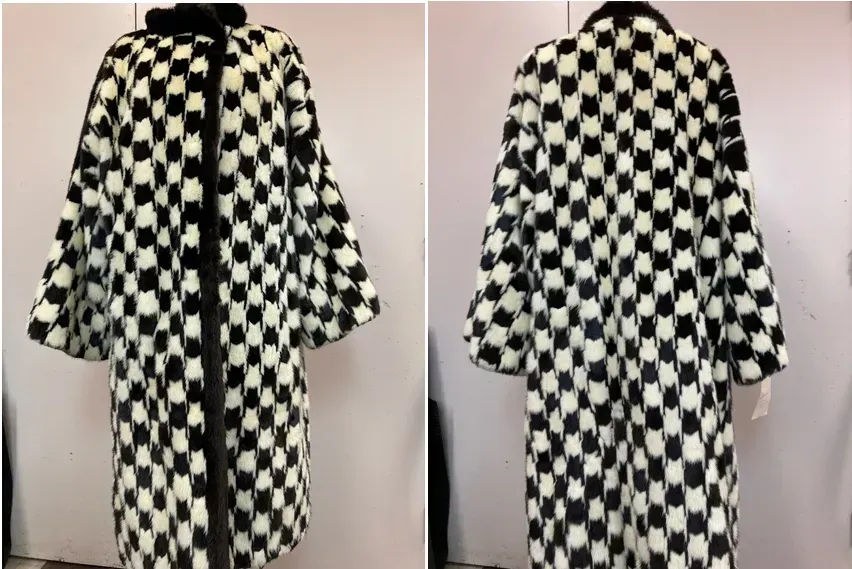
Our founder, Merrill Lowell, was doing herringbone and houndstooth textured mink before anyone else in the trade was working that way. It wasn't a small detail. It was a pattern nobody had seen done in fur at the time, and it's part of what built the shop's name in the first place. We still have a black and white houndstooth mink coat hanging in the workroom today, a direct example of the technique that started it all, decades before it would have been considered a standard option.
How a piece is prepared before it's offered
Nothing goes into the inventory as it arrived. Every piece we take in, whether it's a trade-in, a donation, or a garment coming back from a production, goes through the same professional cleaning and conditioning process we use on any client's coat, and the fur is glazed to bring back the shine before it's ever shown to a buyer. Repairs happen where they're needed, and always in a way that keeps the original construction intact rather than working around it with something easier. What's offered for sale is a piece that's already been maintained the way we'd maintain it for a client who owned it for decades, not something sold as-is.
Deciding whether to keep or sell
Not every vintage piece is worth restoring or keeping, and we'll tell you honestly when that's the case. But a coat with real construction, a fur type that's genuinely hard to find now, and a history you can trace is worth a second look before it's given away or let go. That's true whether it's been sitting in your own closet for years or you're weighing whether to add a piece like it to a collection.
The same standard applies in reverse. If you're deciding whether to purchase a vintage piece from us, it's already been through the inspection and conditioning process, and we can speak plainly to what we know about where it came from. That's a different kind of confidence than buying a vintage fur from a source that can't tell you either of those things.
Private viewings are available by appointment, and a free in-person inspection is the fastest way to find out what you actually have. Call (310) 360-0466.
Edwards-Lowell, (310) 360-0466
Call (310) 360-0466More articles
How to Store a Fur Coat in Los Angeles Heat
A warm closet and a plastic garment bag are the two most common ways a good fur coat gets ruined in this city.
How Often Should a Fur Coat Be Cleaned
The oils and dirt a coat picks up over one season of wear are invisible, and they are exactly what a dried-out pelt or a moth problem starts with.